Why It’s So Hard to Get Rid of Stuff (Part 1 of Cognitive Biases and Organizing)
Welcome to my first installment in the cognitive bias series! What’s a cognitive bias? Check out my intro post from last week for a quick refresh on what cognitive biases are and why I think it’s so important to understand them if you’re having trouble getting organized.
I’m going to start with one of the most powerful cognitive biases that guide our daily decisions: loss aversion.
You might be thinking: well, of course I’m averse to loss. Loss is painful. If I avoid loss, I’m going to be happier.
But loss aversion as a cognitive bias is much more than simply avoiding loss. This cognitive bias makes us feel like a given loss is twice as painful as the joy of an equivalently valued gain. In real terms: losing $100 feels twice as terrible as winning $100 feels good.
This imbalance was historically great for our survival in a dangerous world. Being twice as afraid of biting into something toxic as you are happy about biting into some delicious berries…. well, it just makes good sense.
In our modern world, loss aversion can be more counterproductive. Because of this powerful cognitive bias, we don’t just avoid loss and seek gain: we avoid loss at the expense of significant gain, because it hurts so much! We miss out on so many good things because we are disproportionately afraid of what we’ll lose in the process, even if that loss isn’t existential.
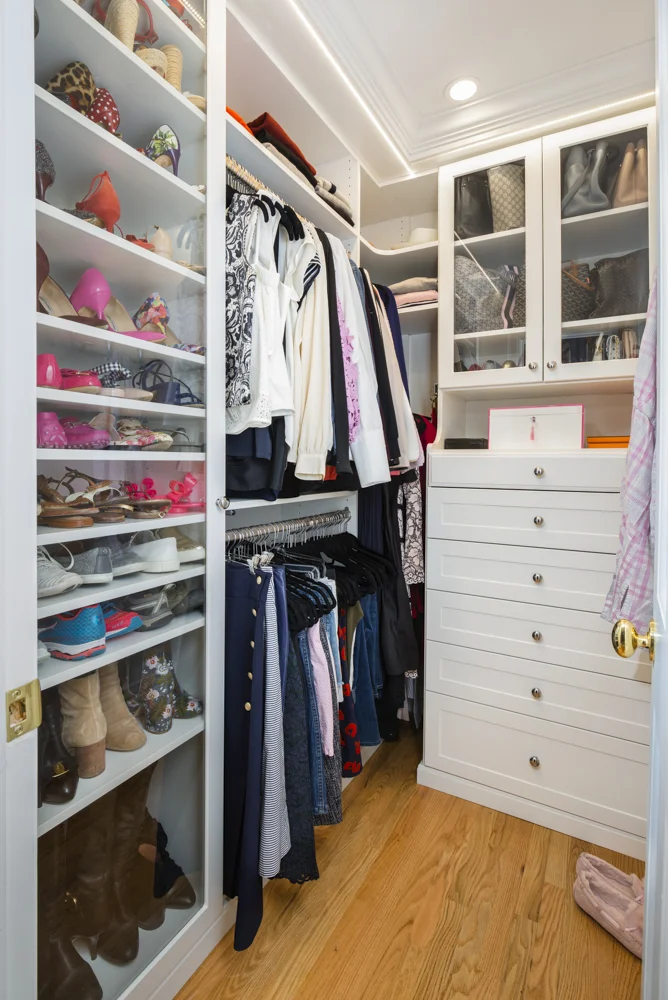
I had a client many years ago who hired me to organize her closet. She had a huge custom closet, stuffed to overflowing with clothing. She couldn’t see what she had, so she didn’t really wear most of those beautiful clothes, and instead rotated through the same few leggings and sweatshirts she could put in a dresser drawer. In order to get organized, she would have needed to decrease the size of her wardrobe by at least 30%.
As I always do with closet organizing, I pulled out each and every item of clothing, category by category. We looked at all the dresses. Then we looked at all the tops. With each category, she could clearly tell me that each item, while high quality and in good condition, was either something that did not fit her or something she hadn’t worn in years. At the same time, she was unable to let go of very many pieces. We ended up deciding together that she wasn’t ready to take the step of organizing her closet.
This client was in the grip of loss aversion. She was so afraid of the pain of feeling like she was losing valuable items that she was unable to experience the joy and calm of having a decluttered, organized closet.
If you recognize yourself in this client’s struggle with loss aversion, what can you do?
Before you even start decluttering, focus on your vision for the space. What do you want it to look like? How are you going to feel once it’s organized? What difference is it going to make in your everyday life? The more clear and motivated you can get about the good things to come, the easier it will be for the gain to overwhelm the feelings of loss.
Be gentle with yourself. Acknowledge what’s happening, and that it is a very normal phenomenon common to literally every single person on the planet. Beating yourself up will not help you make good decluttering decisions, it will only make you feel terrible and less likely to get organized!
As you sort and edit items, keep coming back to your vision and to the potential gains to come from getting organized. Can I declutter this item in the service of my vision? Will having this item make me feel good when I come across it in my space in the future? How could my everyday life be better without this item? These questions will take down the magnitude of loss you feel when getting rid of things, making it easier for you to make good decisions for yourself.
I want to emphasize again: you experience loss aversion every day, whether you realize it or not. The trick is to understand when it’s happening so that you can reframe the decluttering and organizing process.
How has loss aversion impacted your relationship with your stuff?
LMW